
Table of Contents
IPTV on Amazon Fire TV Stick is one of the most popular ways Americans are ditching cable in 2026, and for good reason. The setup is affordable, the device fits in your palm, and when it is configured correctly, the picture quality rivals anything you used to pay a cable company three times as much for.
But there is a catch. Most people plug in their Fire TV Stick, install an IPTV app, and assume it will just work. Sometimes it does. More often, they end up dealing with buffering mid-game, freezing during a live event, or channels that simply refuse to load. Those problems are almost never caused by bad internet. They come from a handful of settings that nobody mentions during setup.
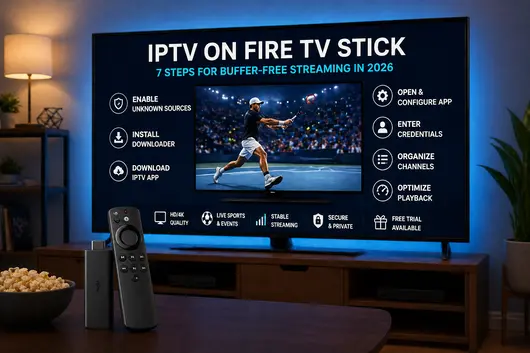
This guide walks through seven specific steps for getting IPTV on Amazon Fire TV Stick running smoothly, with no buffering, no freezing, and a channel list that is actually organized the way you watch. Along the way, you will find guidance on choosing a best IPTV subscription, what best secure IPTV actually means in practice, and how to get reliable HD coverage of live sports events including the US Open. A free trial is available if you want to test the service before making any commitment.
Why IPTV on Amazon Fire TV Stick Has Become the Go-To Setup in the US
Walk into almost any living room where someone has cut the cord and there is a reasonable chance you will find a Fire TV Stick behind the television. The device costs under fifty dollars, ships quickly, and works with virtually every TV made in the last decade that has an HDMI port.
For IPTV specifically, the Fire TV Stick has two major advantages. First, it runs a version of Android that supports sideloading, which means you can install IPTV player apps that are not available in the Amazon store. Second, the remote control and home screen interface are designed for couch use, which makes it accessible for a wide range of users regardless of technical comfort level.
Setting up IPTV on Amazon Fire TV Stick does require a few manual steps that a basic streaming app would not need. But those steps take about fifteen minutes total and you only do them once. Everything after that is just watching television.
What to Look for in the Best IPTV Subscription
Before touching your Fire TV Stick, it helps to understand what makes one IPTV service genuinely better than another. The gap between a quality provider and a poor one is significant, and that gap shows up on your screen.
Channel Count Versus Channel Quality
A provider advertising 30,000 channels sounds impressive until half of them buffer or go offline during peak hours. A more reliable measure is whether the channels you actually care about are consistently available and stream in HD. For US viewers, that means local network affiliates, major cable news and sports channels, and live event coverage.
If you follow tennis and want to watch the US Open, verify that your provider includes those specific sports channels before signing up. The free trial is the best way to confirm this on your own connection.
Stability and Uptime
IPTV on Amazon Fire TV Stick is only as good as the servers behind the subscription. A quality provider runs redundant infrastructure so that even when one server is under load, your stream does not drop. Ask whether backup streams are available for popular channels, especially during high-traffic events.
What Best Secure IPTV Means in Practice
The phrase best secure IPTV refers to providers who hold proper licensing for the content they distribute, use encrypted connections to protect your credentials, and do not monetize your personal data. When you enter a username and password into any IPTV app, that information travels over the internet. A secure provider handles it responsibly.
Practically speaking, look for a clear privacy policy, a real support contact, and transparent pricing. Services that operate without any verifiable business information are worth avoiding.
Try It First: Free Trial
Afree trial lets you run IPTV on Amazon Fire TV Stick on your actual home setup before any money changes hands. You can check whether your favorite channels are included, see how the stream handles your connection, and confirm the app works well with your device. Reputable providers offer this without requiring a credit card.
Step-by-Step: Setting Up IPTV on Your Amazon Fire TV Stick
These seven steps cover the complete process from first settings change to fully optimized playback. Follow them in order and the whole thing takes roughly fifteen minutes.
Step 1: Install the Downloader App
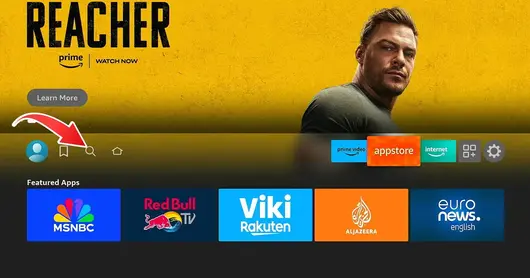
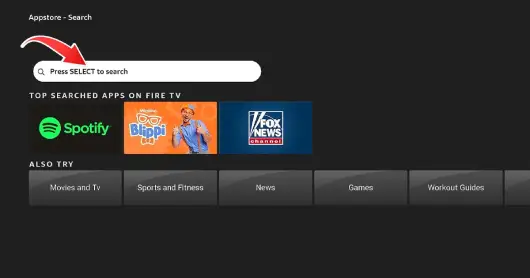
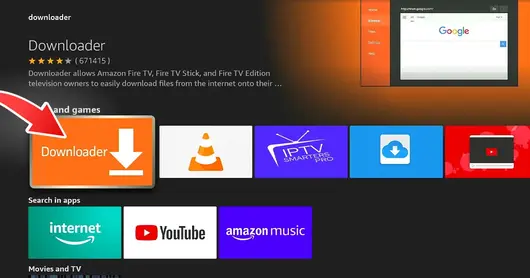
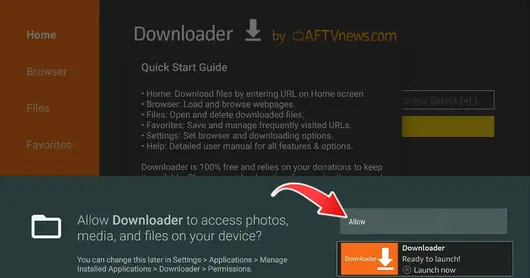
Search for « Downloader » in the Amazon app store and install it. This free utility lets you enter a URL and pull an APK file directly onto your stick. It is the standard method for sideloading on Fire TV and has been used by millions of viewers. Once installed, open Downloader and enable JavaScript in its settings if the option appears.
Step 2: Enable Apps from Unknown Sources
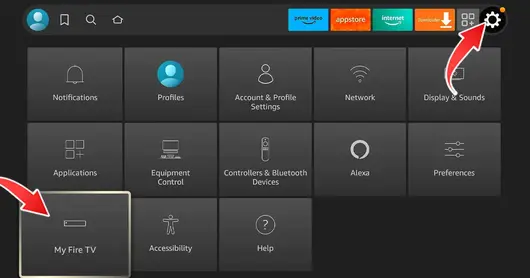
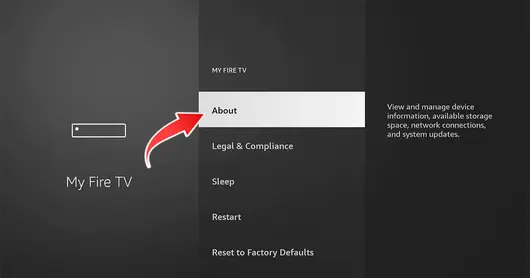
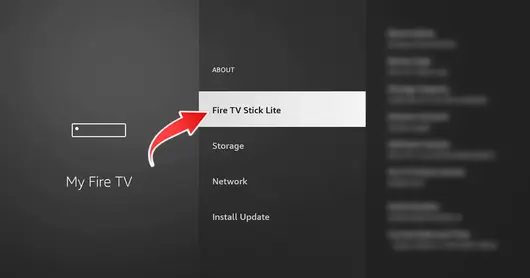
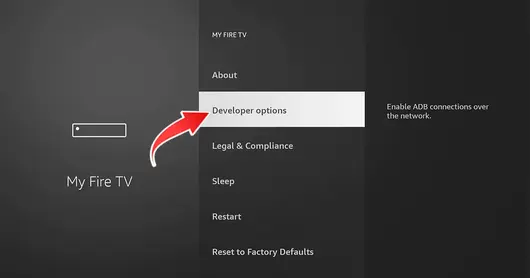
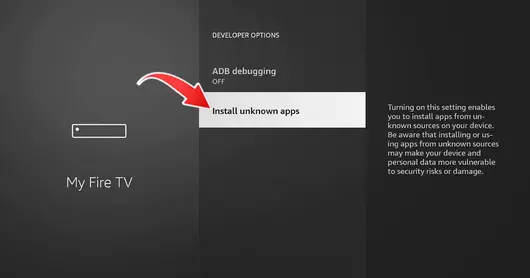
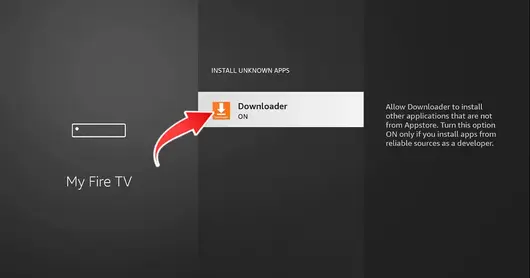
IPTV on Amazon Fire TV Stick requires installing apps that are not in the official Amazon store. To allow this, go to Settings, then My Fire TV, then Developer Options. Toggle on the option labeled « Apps from Unknown Sources. » A warning will appear; confirm that you want to proceed. This setting does not expose your device to risk when you are downloading from a known source.
Step 3: Download Your IPTV Player APK
Your IPTV provider will supply a recommended player or a direct download link when you register or start a free trial. Common players that work well for IPTV on Amazon Fire TV Stick include IPTV Smarters, TiviMate, and similar options. Open Downloader, enter the URL your provider gives you, and download the file. When the download finishes, tap Install to complete the process.
Step 4: Open the Player and Configure Initial Settings
Open your newly installed IPTV player from the app list. On first launch, most players ask you to select a connection method. The two most common are M3U playlist URL and Xtream Codes API. Your provider will specify which to use. Before entering your credentials, navigate to the player’s settings and increase the video buffer size if that option is available. This one adjustment prevents most of the short freezes people associate with IPTV on Amazon Fire TV Stick.
Step 5: Enter Your Subscription Credentials
Enter the login details exactly as your provider supplied them. For M3U, this is a URL. For Xtream Codes, it is a server address, username, and password. Check for typos, particularly in long URLs where a single wrong character prevents the channel list from loading. Once entered correctly, the player will connect and begin downloading your channel list. Depending on subscription size, this takes between thirty seconds and two minutes.
Step 6: Organize Your Channel List
With your channels loaded, spend a few minutes building favorites lists. This is especially useful for sports fans who want to find live events quickly without scrolling through thousands of channels. Create a Sports folder and add your major network sports channels, regional coverage, and any premium sports tier you have access to, including channels covering the US Open and other major live events.
Step 7: Optimize Playback Settings for Buffer-Free Streaming
This is the step most setup guides skip, and it is usually what separates a smooth IPTV experience on Amazon Fire TV Stick from a frustrating one.
Enable hardware decoding. Your player likely has this option in its playback settings. The Fire TV Stick’s processor handles hardware-decoded video far more efficiently than software decoding, which reduces CPU load and eliminates most dropped frames.
Turn on auto-reconnect. Look for a setting that automatically resumes a stream after a brief interruption. This means minor server hiccups recover on their own without you touching the remote.
Adjust the network buffer. On a connection of 25 Mbps or faster, a moderate buffer setting of five to ten seconds smooths out temporary fluctuations. On slower connections, a smaller buffer is actually better because it does not try to pre-load content the connection cannot sustain.
Set your Fire TV Stick display resolution correctly. Go to Settings, then Display and Sounds, then Display, and set the resolution to match your TV. Running a 4K signal on a 1080p television wastes processing power that could be used to maintain stream quality.
Watching Live Sports on IPTV on Amazon Fire TV Stick
Live sports are the real test of any streaming setup. Unlike on-demand content, live events cannot be buffered ahead of time. Every frame arrives in real time, which means your connection and your provider’s servers both need to be performing well simultaneously.
For major events like the US Open, server demand on any streaming platform spikes. The best providers plan for this with dedicated high-capacity streams and backup servers for popular sports channels. Before a big event, check whether your provider offers a backup stream for the channel you will be watching.
A few practical tips that make a measurable difference for live sports on IPTV using Amazon Fire TV Stick:
Connect via ethernet. A USB-to-ethernet adapter for Fire TV Stick costs under fifteen dollars and eliminates the latency and occasional drop-outs that even a strong Wi-Fi signal introduces. For a close match where every second counts, wired is more reliable.
Close background apps before the game starts. The Fire TV Stick has limited RAM. The more that is freed up before you start your stream, the more stable the playback.
If you see buffering on sports channels but not on standard channels, the issue is server-side rather than your connection. Switch to a backup stream or contact your provider’s support to identify which stream performs best for that channel during peak load.
Troubleshooting IPTV on Amazon Fire TV Stick
Even a well-configured setup occasionally runs into problems. These are the most common issues and how to fix them quickly.
Buffering and Freezing
Start by confirming your internet speed with a test on any device connected to the same network. HD IPTV streaming requires at least 10 Mbps, and 4K content needs 25 Mbps or more. If speeds are fine, clear your IPTV app’s cache: go to Settings, then Applications, then Manage Installed Applications, select your player, and tap Clear Cache.
If specific channels buffer but others do not, those channels may be on an overloaded server. Try a backup stream if your provider offers one.
App Crashing or Not Opening
A fresh install resolves most app stability issues. Uninstall the IPTV player, restart your Fire TV Stick by holding the select and play buttons simultaneously for five seconds, and reinstall the app using Downloader. Also confirm you are using the version your provider recommends, as older APK versions sometimes conflict with newer Fire TV firmware updates.
Remote Becoming Unresponsive Inside the App
This is a known quirk of third-party apps on Fire TV Stick. Hold the home button for three seconds to return to the home screen, then reopen your IPTV player. If it happens repeatedly, re-pair your remote by holding the home button for ten seconds while pointing it directly at the stick.
Is IPTV on Amazon Fire TV Stick Safe and Legal?
The device itself is a legitimate consumer product. Sideloading apps is a built-in feature that Amazon explicitly supports through the developer options menu. Using a licensed IPTV application on it is entirely legal.
The variable that matters is the service you subscribe to. A provider that holds proper broadcast rights for the content it distributes operates legally. This is the substance behind the term best secure IPTV: it refers to a service that sources its content appropriately, encrypts your account credentials, and does not expose you to unnecessary legal or privacy risk.
Many US viewers also use a VPN on their Fire TV Stick alongside their IPTV subscription. A VPN encrypts your traffic and prevents your internet provider from detecting and throttling streaming activity. Choose one with US-based servers, a clear no-logs policy, and a reputation for maintaining good speeds on video content.
Avoid providers that have no verifiable contact information, no clear terms of service, and pricing that seems impossible for a legitimate business. These signs typically indicate that content is being redistributed without licensing, which creates both legal exposure and service reliability problems.
FAQ: IPTV on Amazon Fire TV Stick
Can you really use IPTV on an Amazon Fire TV Stick?
Yes. The Fire TV Stick supports sideloading through its developer options, which allows you to install IPTV player apps that are not listed in the Amazon store. The seven-step process in this guide covers everything you need to get it running.
What is the best IPTV player for Fire TV Stick?
The right player often depends on what your provider recommends, since some services are optimized for specific apps. In general, look for a player with hardware decoding support, a reliable EPG (electronic program guide), and the ability to create custom favorites lists. IPTV Smarters and TiviMate are commonly recommended for Fire TV Stick.
Does IPTV work for live sports like the US Open?
With a stable connection and a quality provider, IPTV on Amazon Fire TV Stick handles live sports well, often in HD or 4K. For high-profile events like the US Open, connecting via ethernet and choosing a provider with redundant sports streams makes a significant difference in reliability.
How do I stop IPTV from buffering on my Fire TV Stick?
Enable hardware decoding in your player settings, connect via ethernet instead of Wi-Fi, set an appropriate network buffer level, and clear the app cache regularly. If buffering is limited to specific channels, ask your provider about backup streams for those channels.
Is there a free trial available?
Yes. A free trial lets you test IPTV on Amazon Fire TV Stick on your own connection and with your own channel preferences before any commitment. This is the most reliable way to confirm a subscription is right for you.
What internet speed do I need?
10 Mbps is a working minimum for HD streaming. For 4K content or running multiple streams at once, 25 Mbps or higher is recommended. Consistency matters as much as peak speed: a stable 15 Mbps connection performs better than a 50 Mbps connection with frequent fluctuations.
Wrapping Up
Getting IPTV on Amazon Fire TV Stick to perform at its best is not complicated, but it does require those seven deliberate steps rather than a default install. The difference between a setup that buffers constantly and one that runs without interruption usually comes down to three things: the right player settings, a quality subscription with stable servers, and a few optimizations that the device will not do on its own.
Whether you are watching local news, live tennis at the US Open, or a full slate of weekend sports, IPTV on Amazon Fire TV Stick can deliver the experience that cable used to charge far more to provide.
If you want to see it for yourself before committing, a free trial is available. Get your setup running, confirm your favorite channels load cleanly, and watch a live event. That will tell you everything you need to know.